Trade show floors tell you the truth faster than any industry report. Vendors spend serious money on stands, and they only put messages on the wall that are winning them meetings right now. So when the same three ideas appear on stand after stand across an entire exhibition hall, that is the market talking.
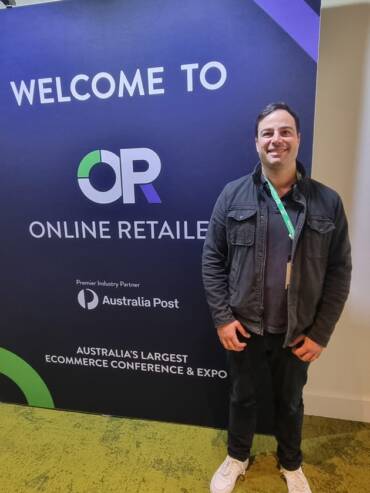
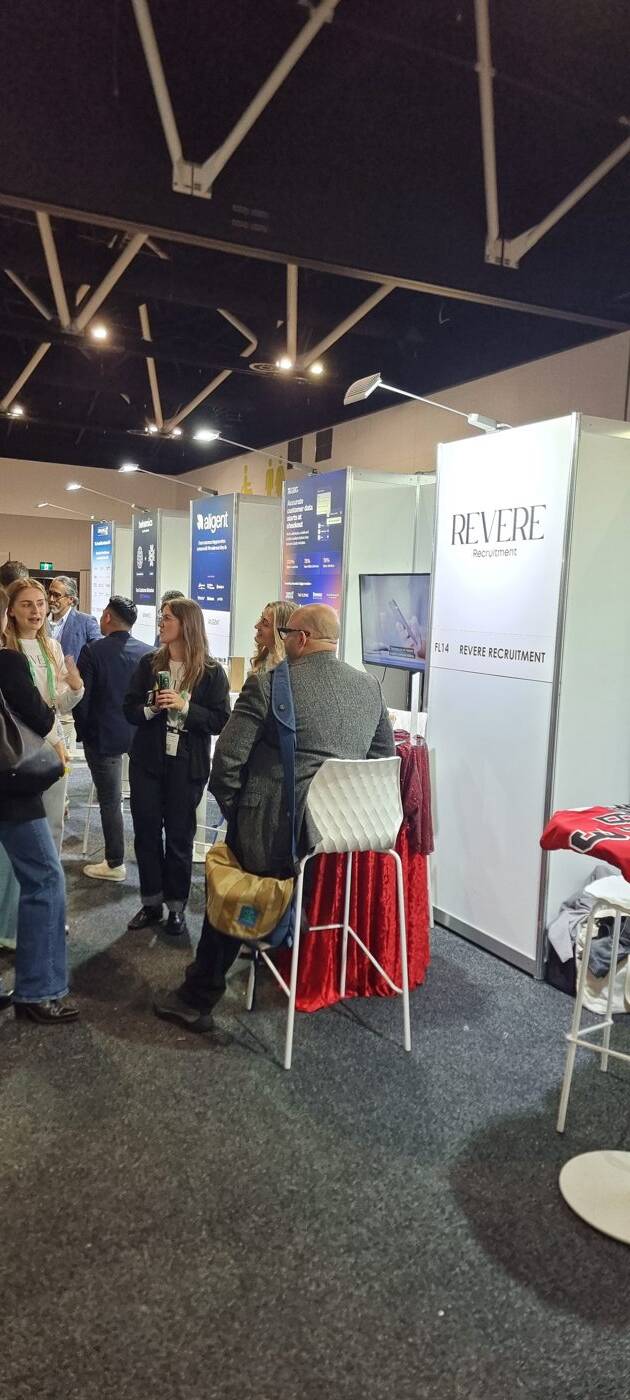
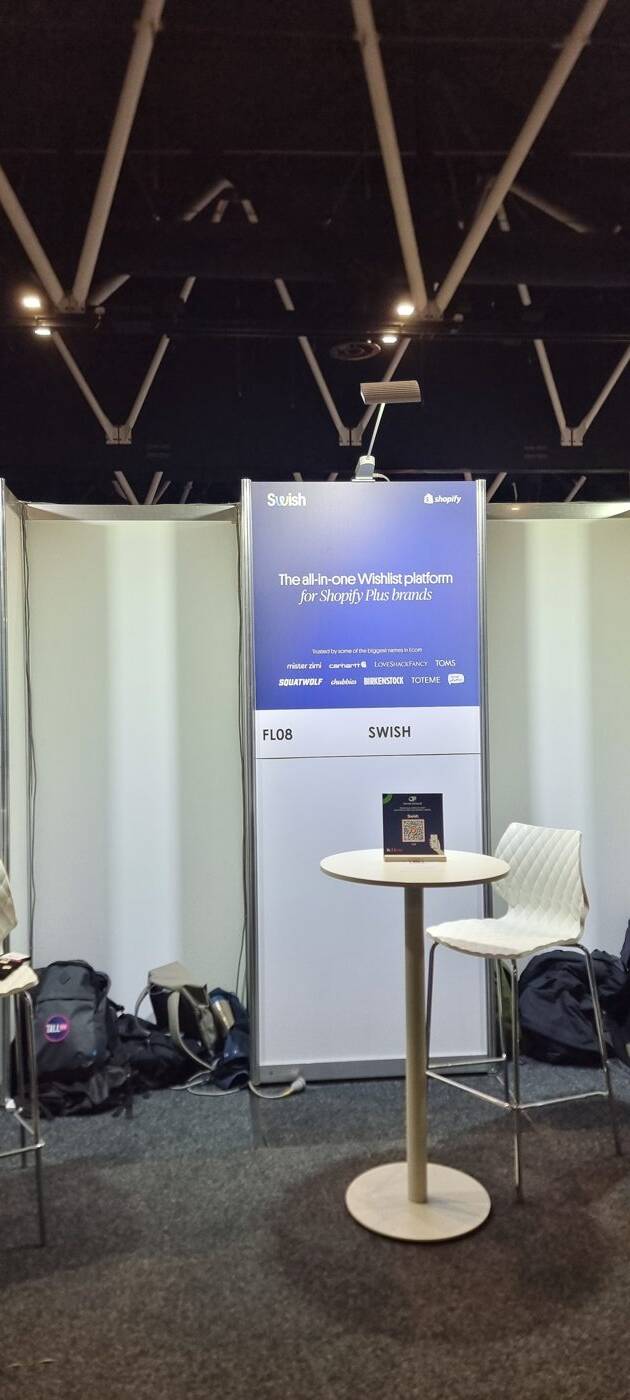
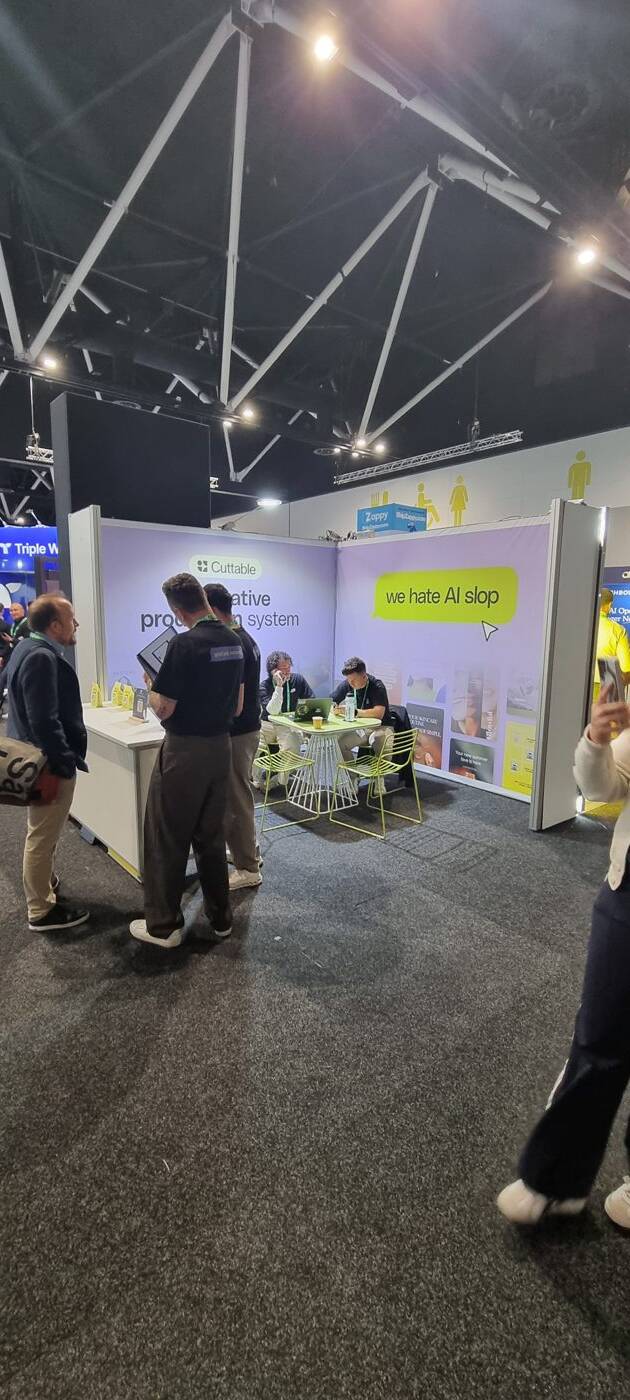
At Online Retailer 2026, presented with Australia Post at ICC Sydney, three ideas dominated the hall. Exhibitors were pushing a new focus: being recommended by AI assistants, a visibility layer that now sits alongside ranking on Google. AI has moved from tool to employee, with agents now selling, supporting and running operations. And the unglamorous back end of retail, freight and fulfilment, has become an arms race of robotics and automation. A fourth thread ran underneath all of it: the channels where Australians shop keep multiplying.
Here is what we saw, stand by stand.
AI visibility becomes SEO’s next layer
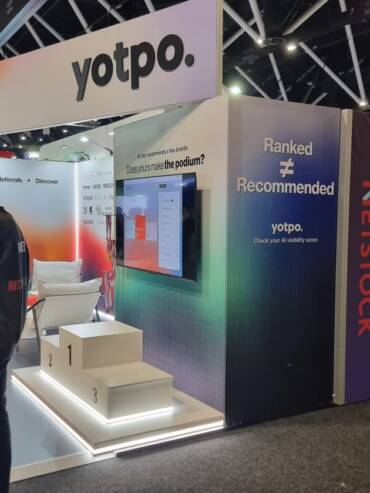
The sharpest line of the whole show belonged to Yotpo: Ranked ≠ Recommended. Their stand asked one question, does your brand make the podium when a shopper asks ChatGPT, Gemini or Perplexity what to buy, and offered an AI visibility score to answer it. They even built a physical winners’ podium into the stand.
They were far from alone. At least four agencies on the floor have rebuilt their pitch around AI search, and the free LLM visibility score was the lead magnet of choice, handing brands a rating across ChatGPT, Gemini and Perplexity with competitor comparisons attached. The conversion end of the same argument was everywhere too: traffic that never converts is just a very expensive audience, and audits were the hook of the day.
Twelve months ago, AI visibility was a conference talking point. Today it is a product category with scores, tools and dedicated agencies. It is not a replacement for SEO. It is built on it, and the brands getting recommended are the ones with the strongest search foundations.
What actually moves an AI visibility score is not mysterious. Assistants lean on reviews, structured product data, consistent entity information, and genuine third-party mentions. Those are SEO fundamentals. That means review generation, schema, digital PR and clean product feeds are no longer separate jobs. They are one job, and the agencies on this floor were simply extending it under a new name.
AI stopped being a tool and started being staff
The second wall-to-wall theme was agentic commerce. Not chatbots. Agents that do jobs.
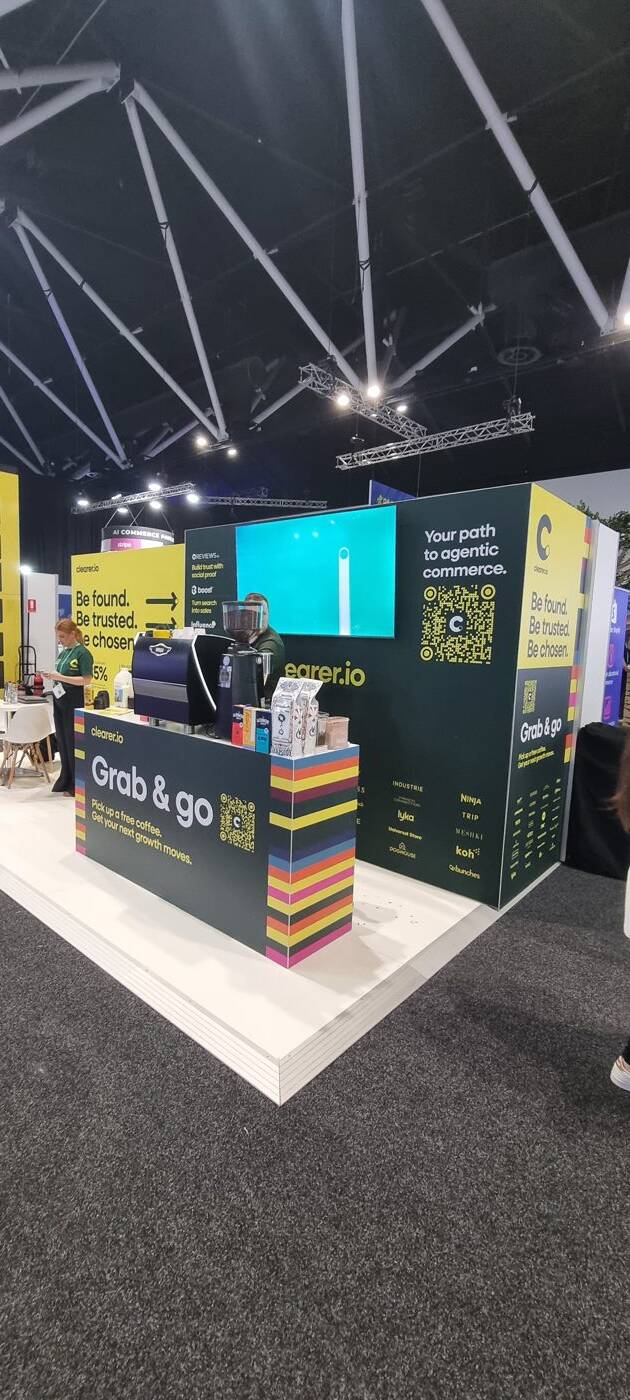
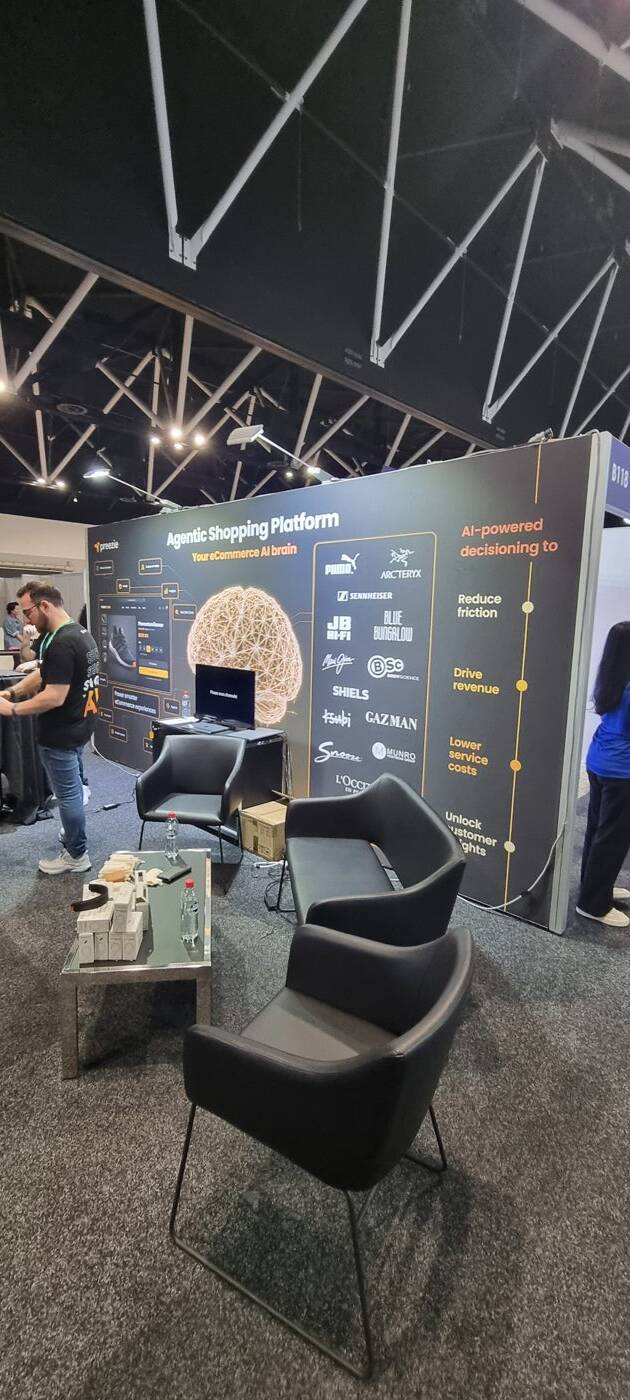
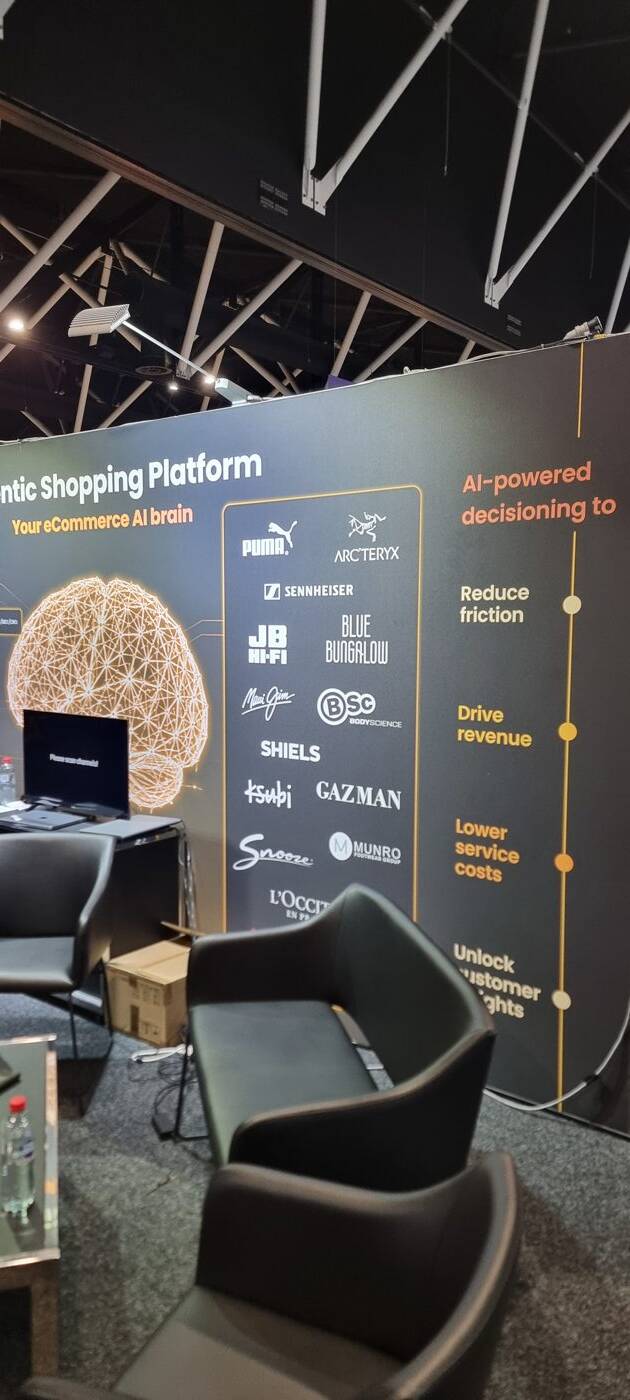
clearer.io framed its whole stand as “Your path to agentic commerce”, bundling reviews, search and social proof into one AI-driven stack. preezie, who also sponsored the AI Workshop stage, pitched an “Agentic Shopping Platform, your eCommerce AI brain” with Puma, JB Hi-Fi, Arc’teryx and L’Occitane already on the client wall. YEP AI sold an “AI Employee Team” for Shopify, three named roles, marketing specialist, customer support and operations specialist. Handle went further again: AI workers that live in Slack, get briefed like staff and pick up the ops grind.
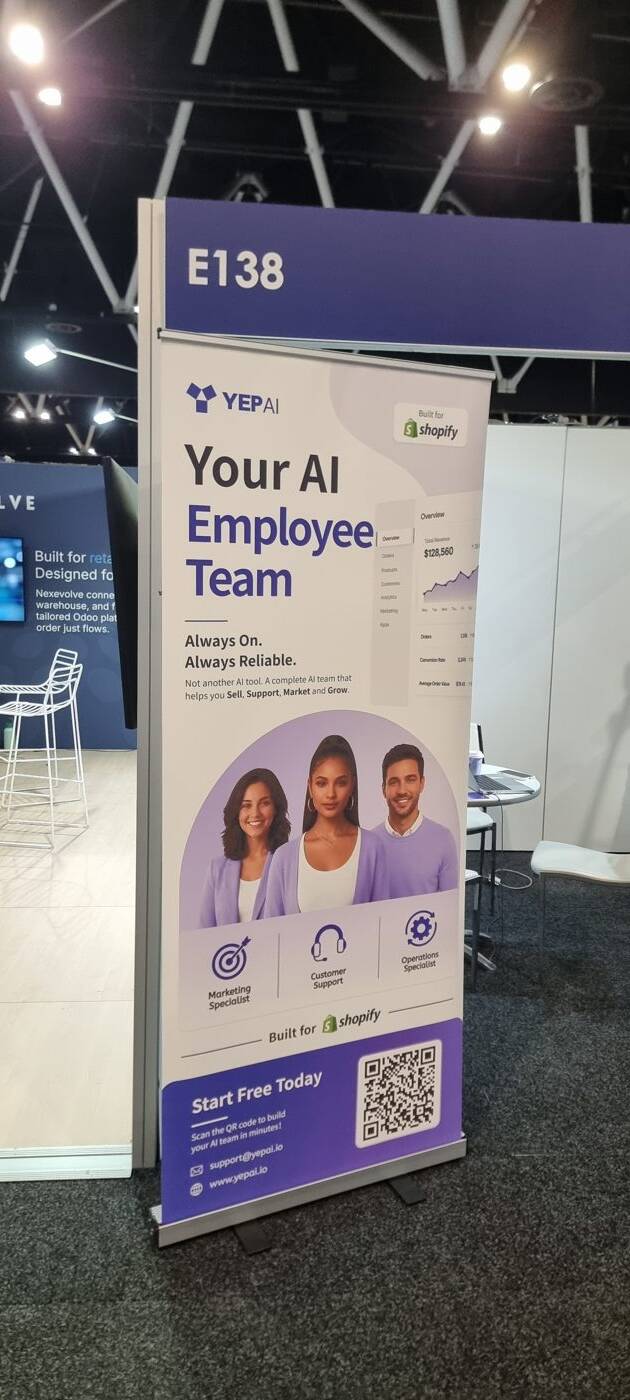
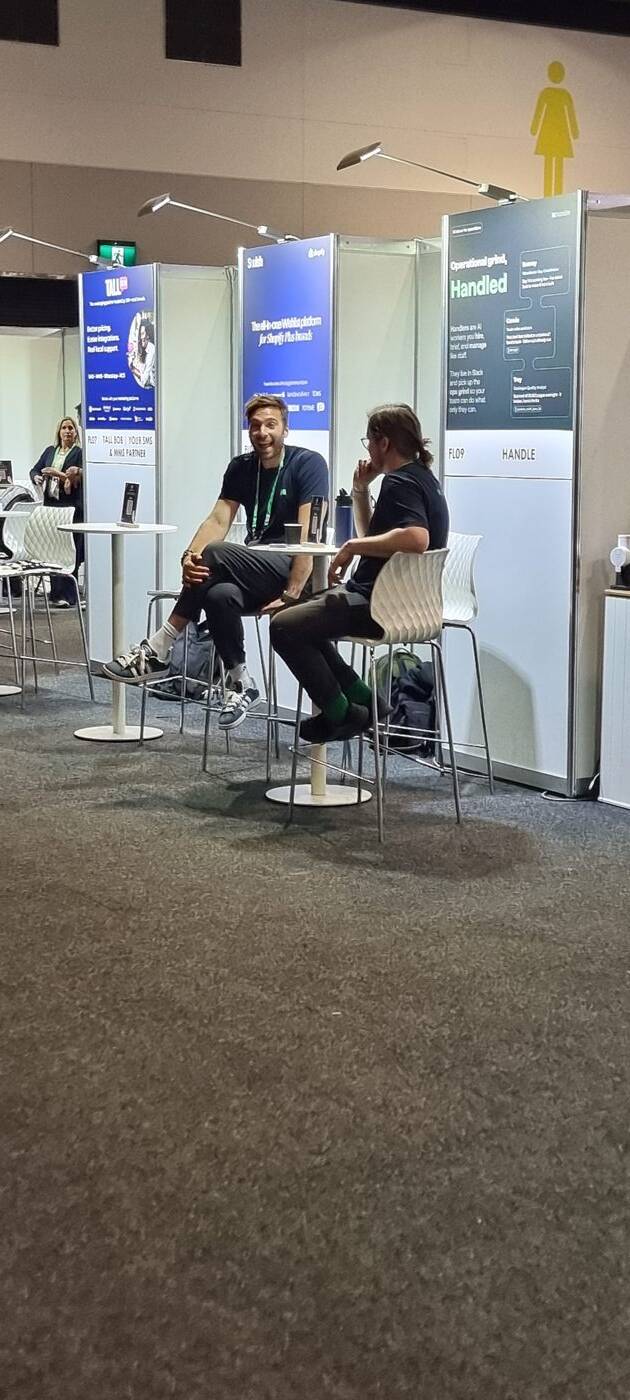
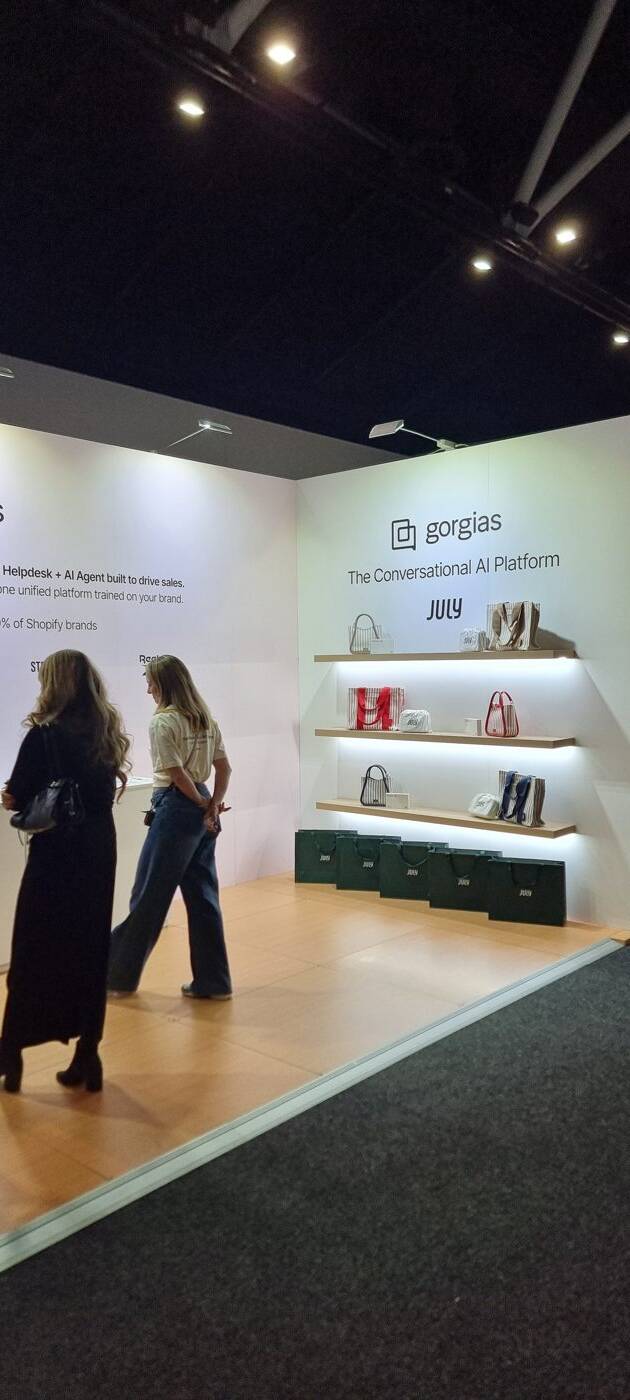
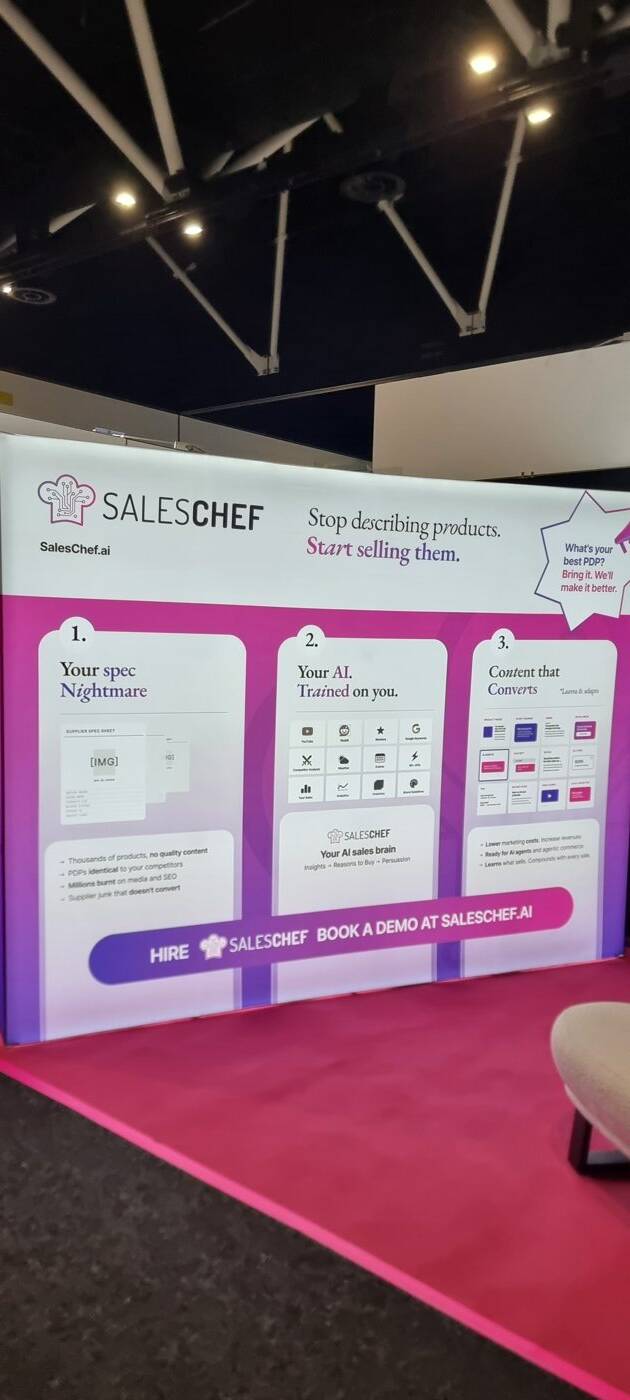
Around them sat a full supporting cast. Gorgias positioned as the conversational AI platform, with Aussie luggage brand July as the showcase. SalesChef turned supplier spec sheets into converting product pages, with the tagline “Stop describing products. Start selling them.” Experro, Fast Simon and Tagalys fought over AI product discovery and visual merchandising, Tagalys claiming up to 45 per cent more conversions for fashion brands like SKIMS, Meshki and Tony Bianco. Instant chased abandoned cart revenue. Humii offered an AI mystery shopper to find out what customers really think “before Reddit does.”
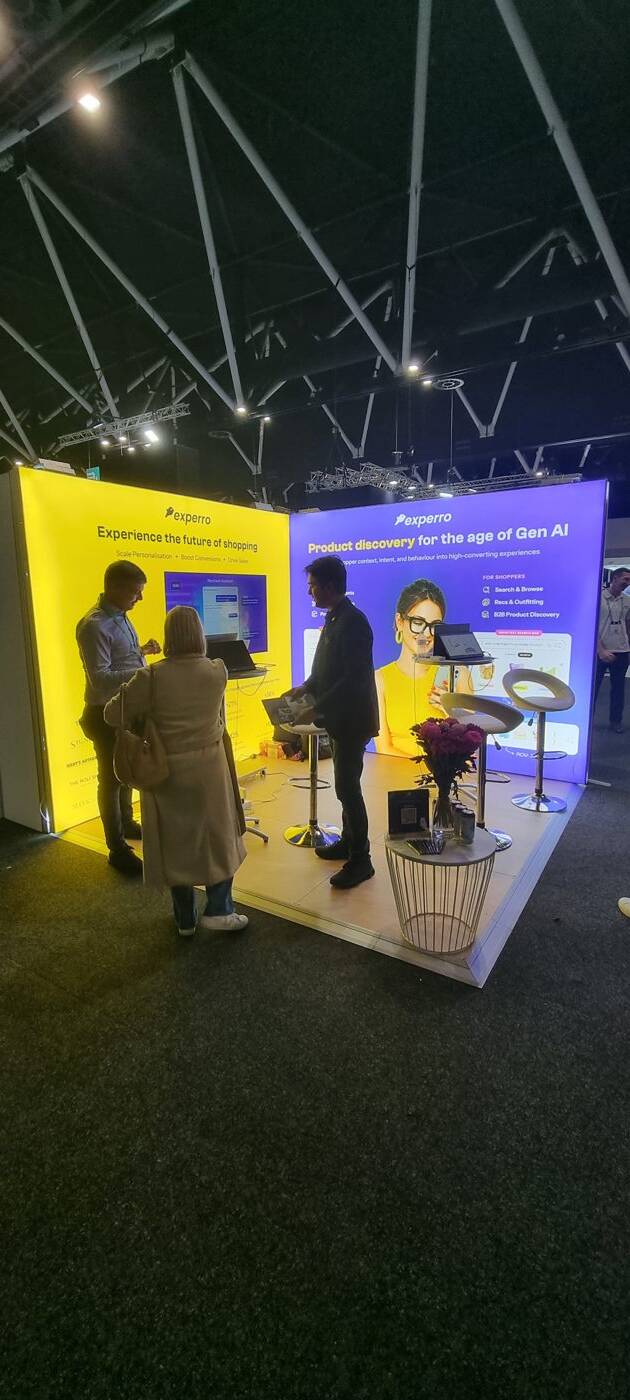
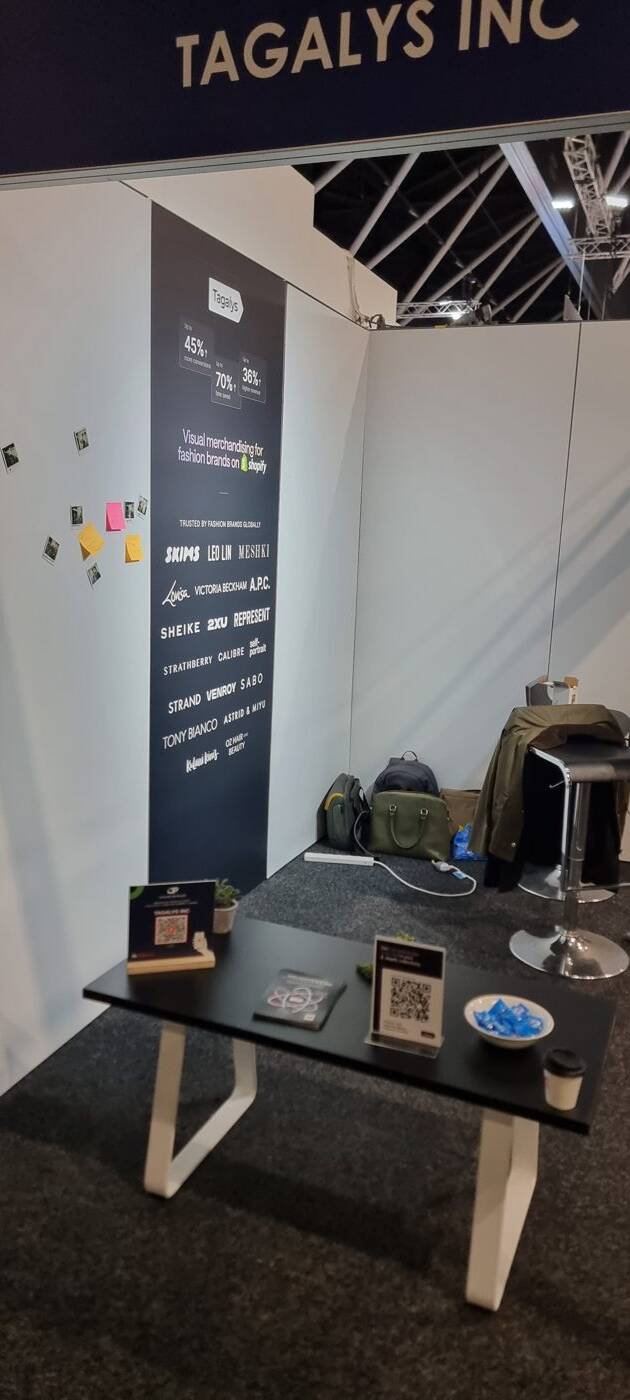
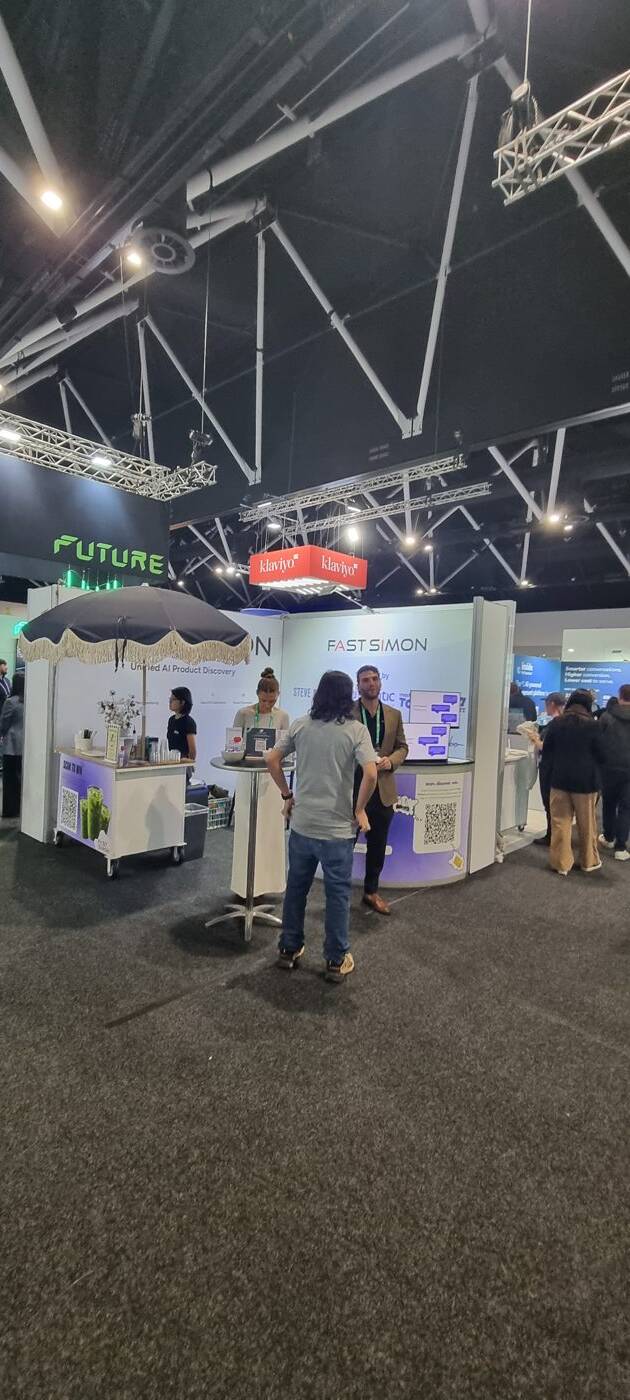
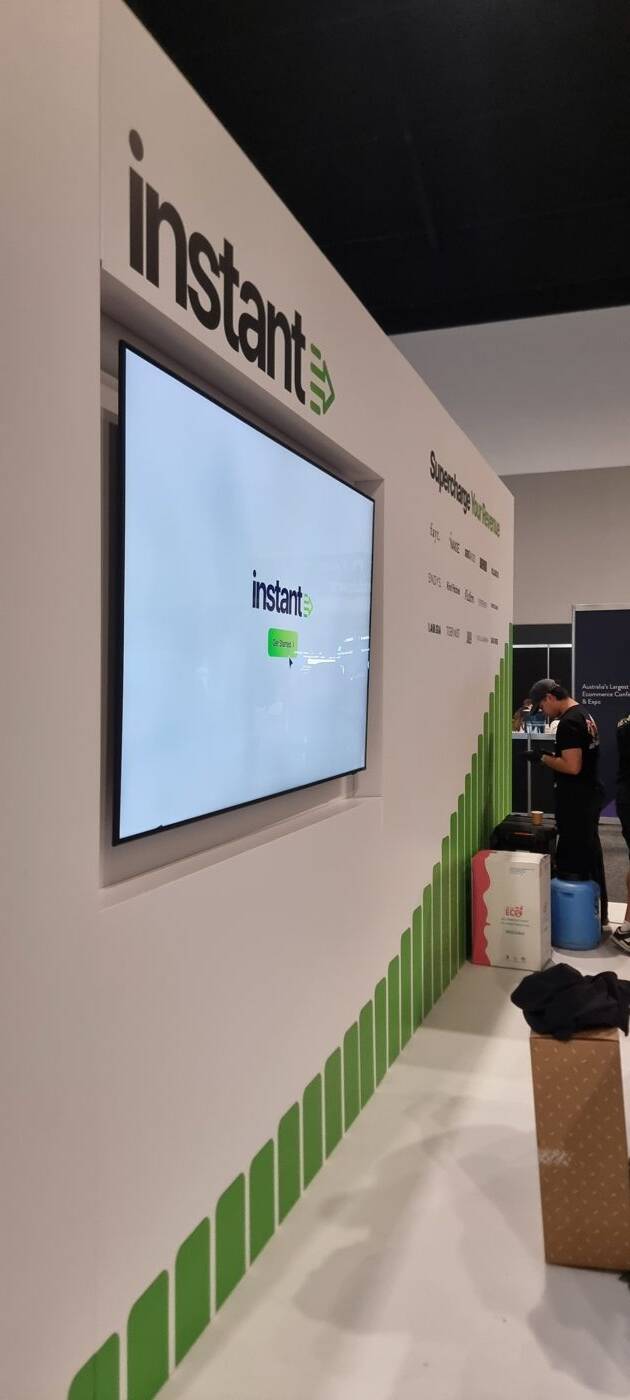
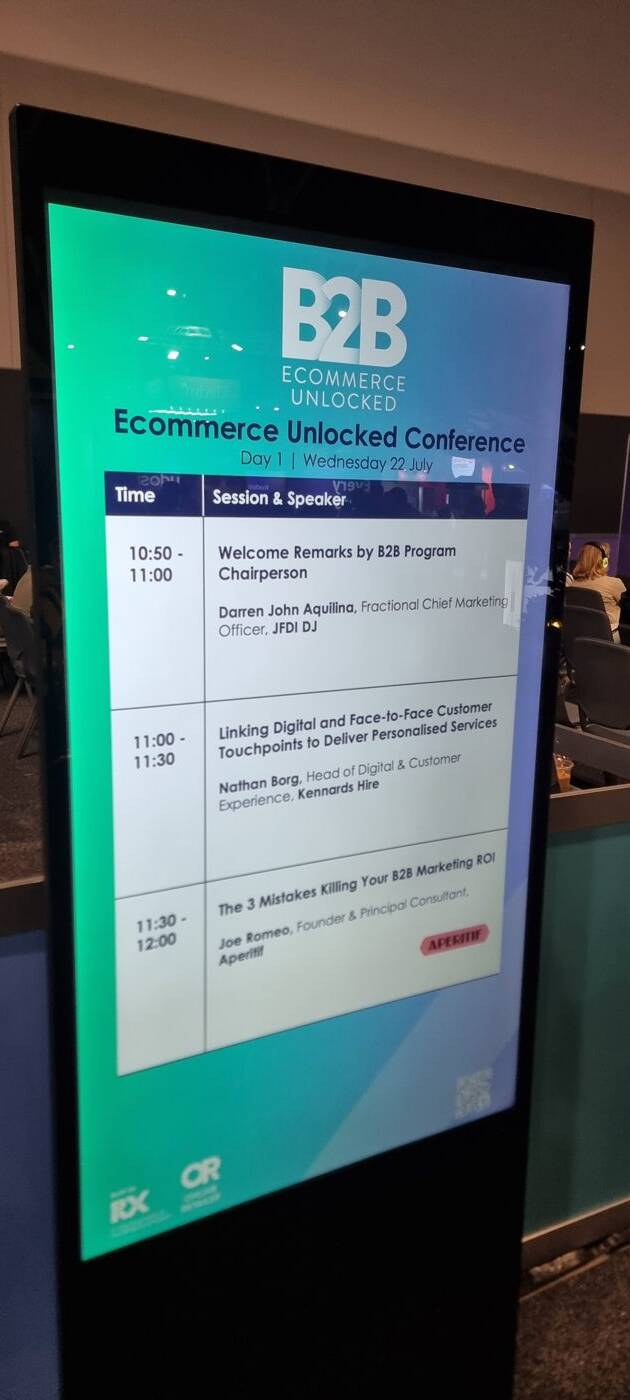
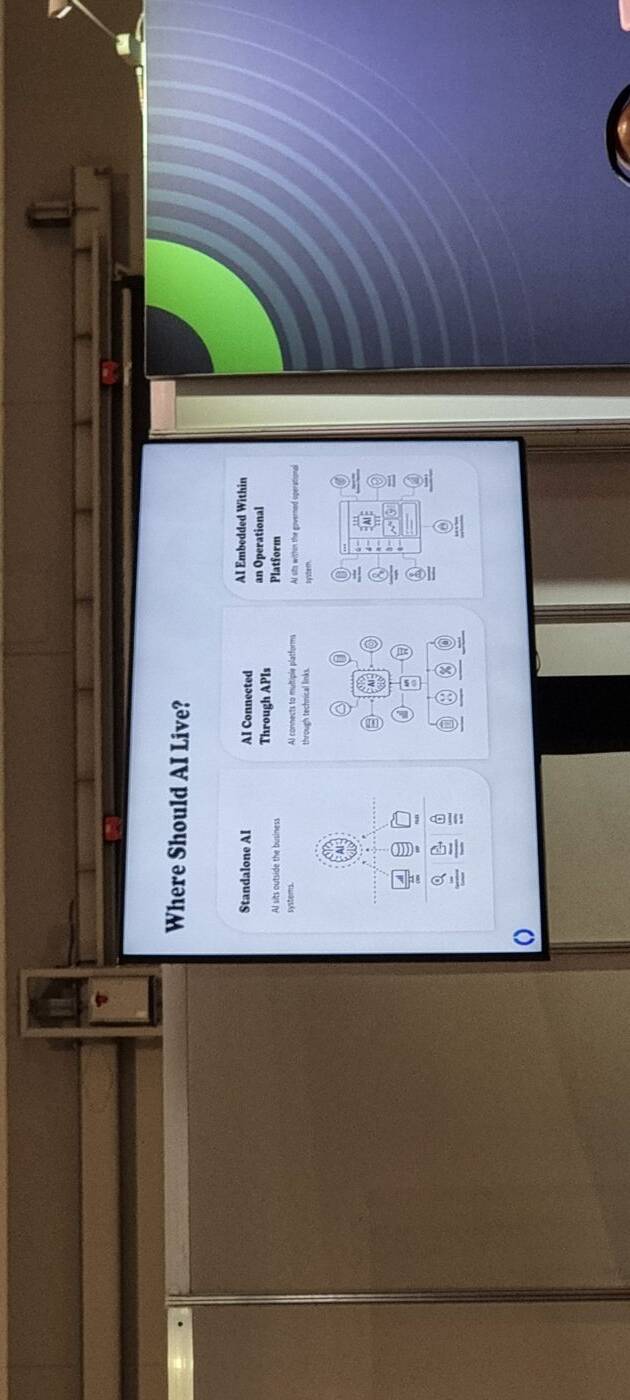
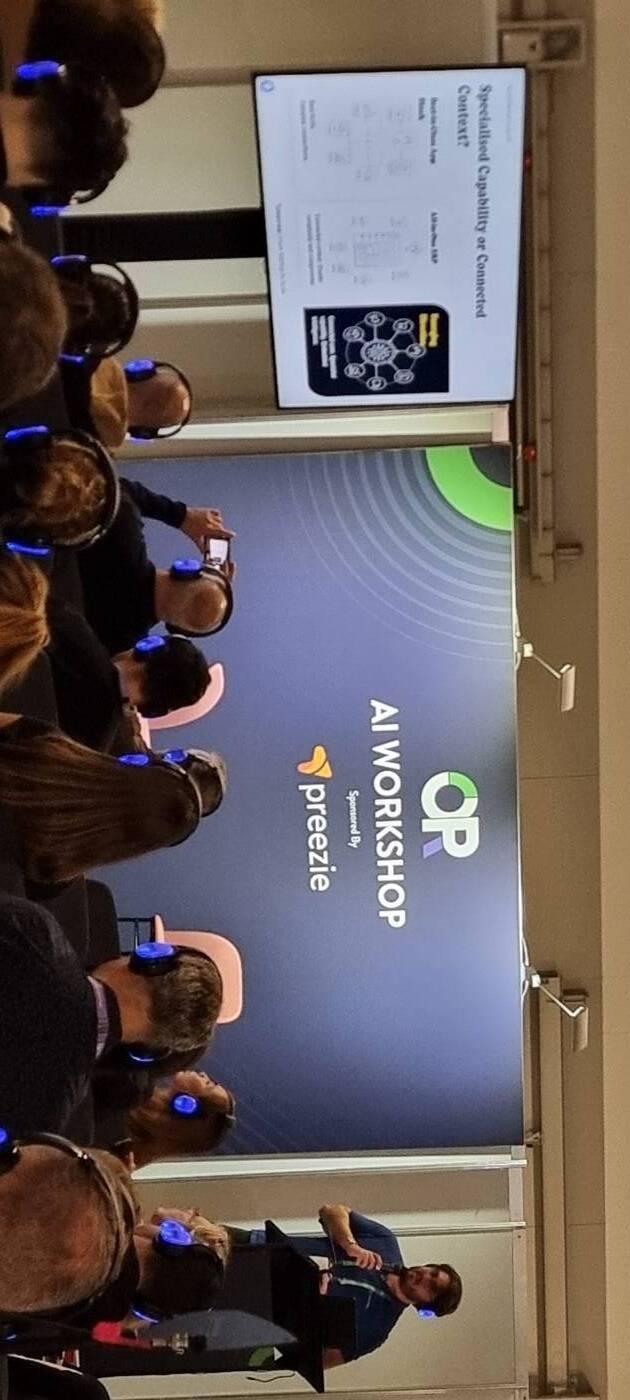
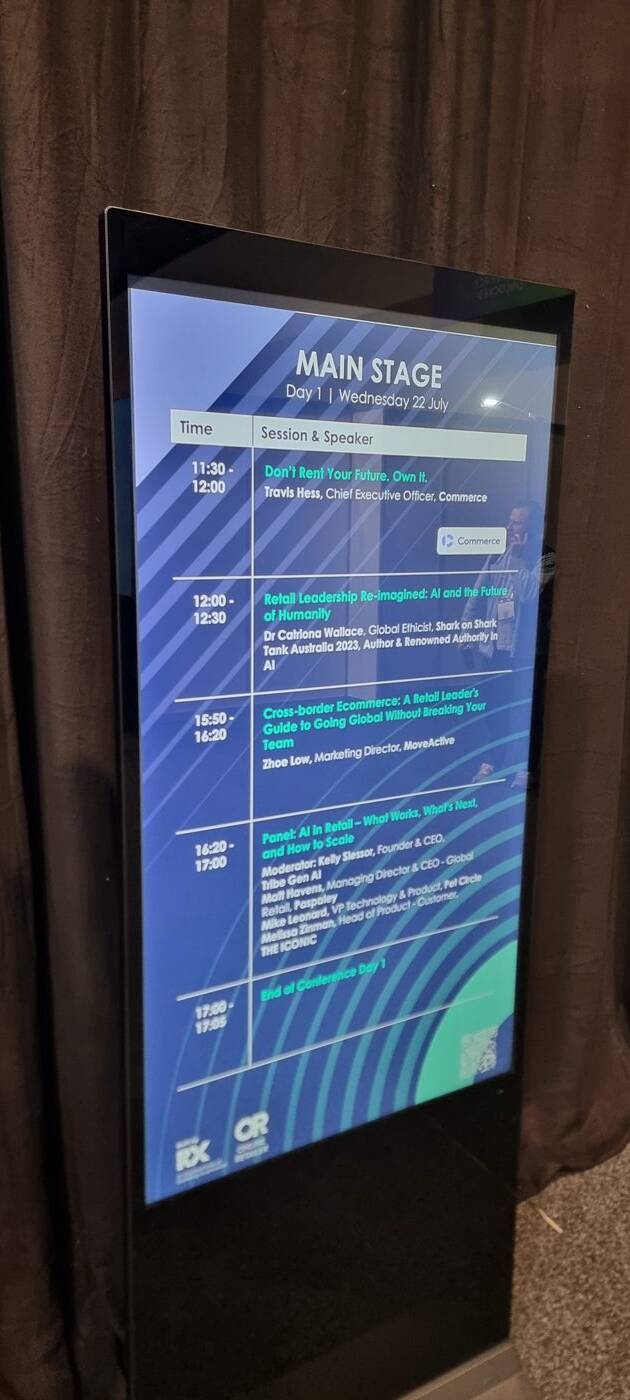
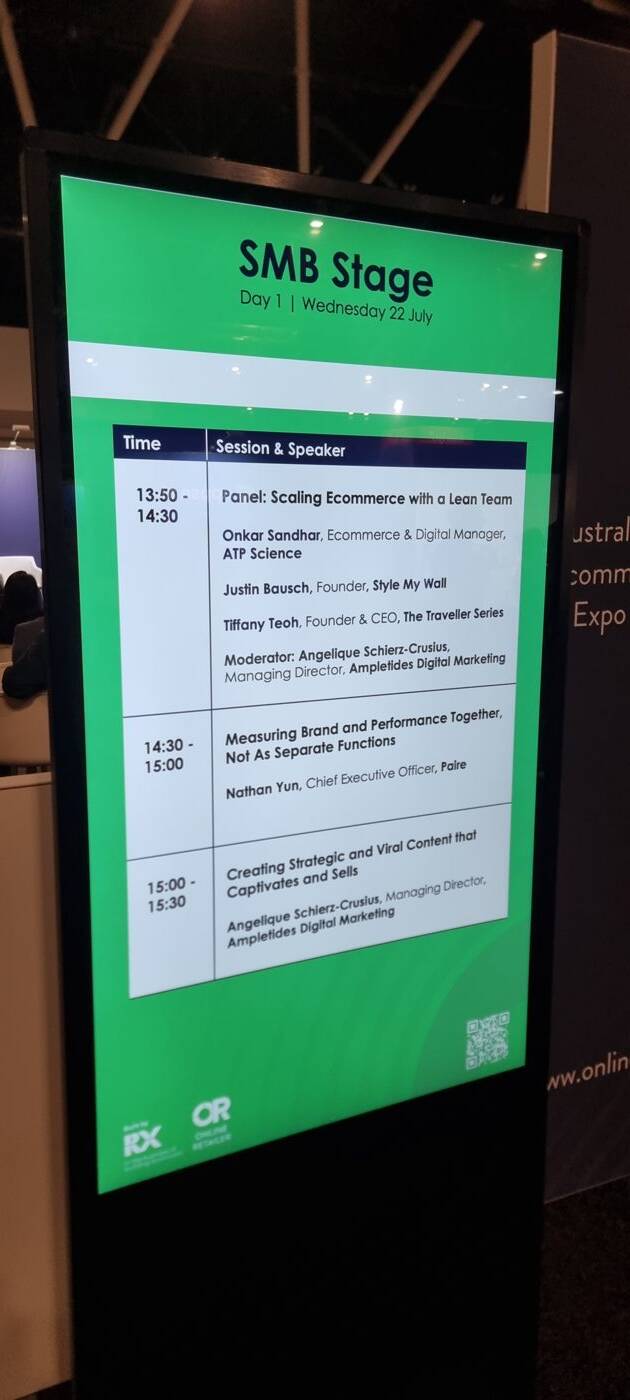
The stages backed it up. The SHE-com stage ran “How Smart Founders Are Using AI To Scale Without Adding More Hours.” The Main Stage closed Day 1 with an AI in Retail panel featuring Pet Circle, Paspaley and THE ICONIC. And on the SMB Stage, one founder’s slide summed up why any of this matters: “The business owned me.”


The back end got serious: robots and the fulfilment arms race
The most physically impressive stands were not marketing tech at all. They were logistics.
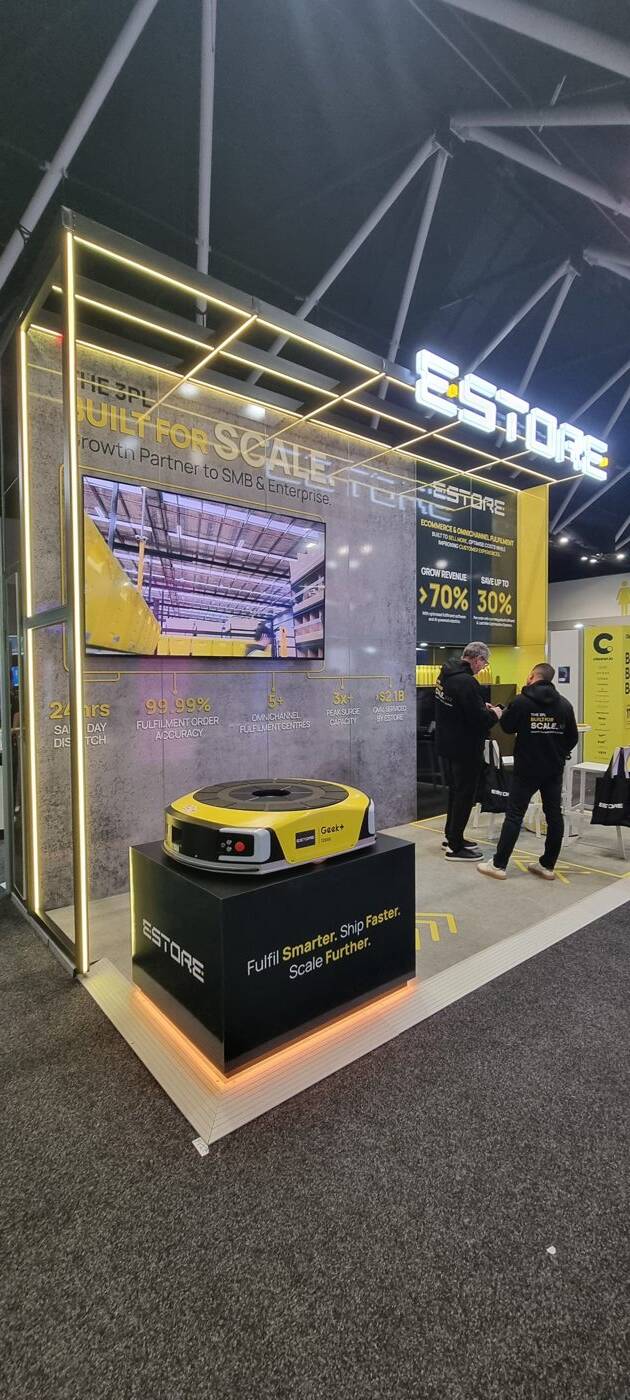
eStore put an actual Geek+ warehouse robot on a plinth, claiming 24-hour same-day dispatch, 99.99 per cent fulfilment accuracy and more than $2.1 billion in GMV serviced. Shiperoo hung a rotating LED fulfilment tower from the ceiling. MachShip claimed the freight orchestration layer, 200 million items shipped, 500 plus carriers. Starshipit used the show to launch a WMS. Loop covered returns, exchanges and fraud prevention for brands like Aje and Nomad.
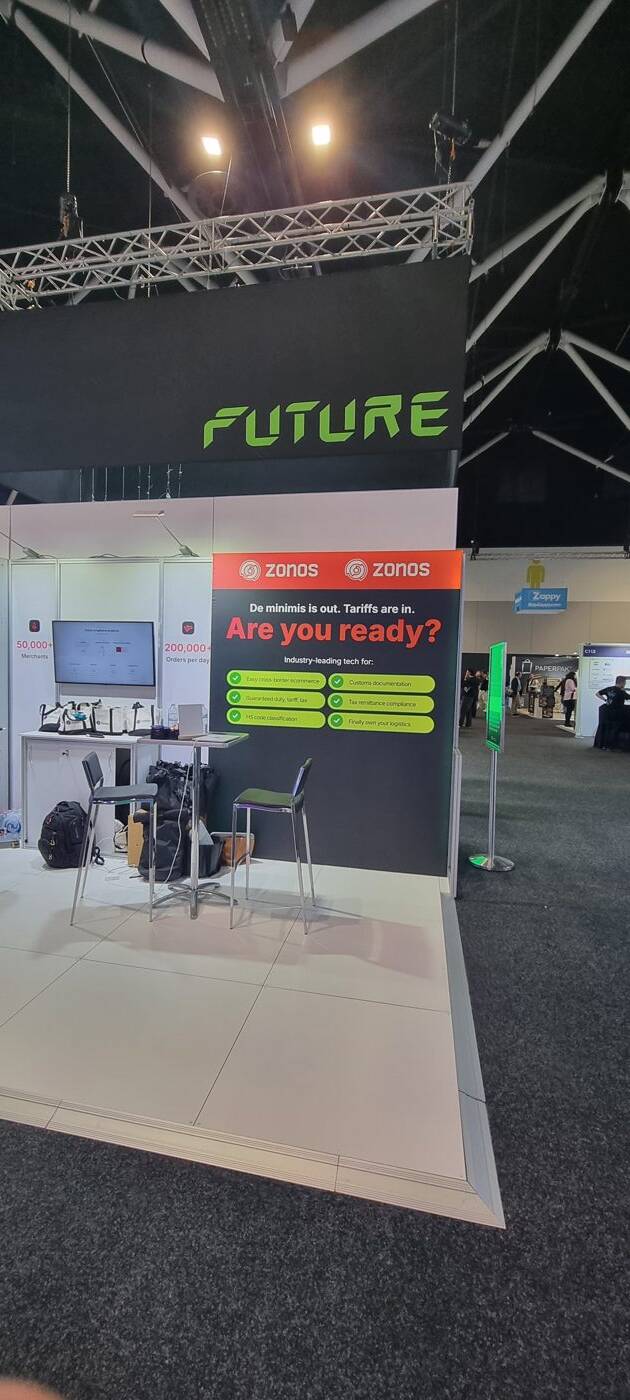
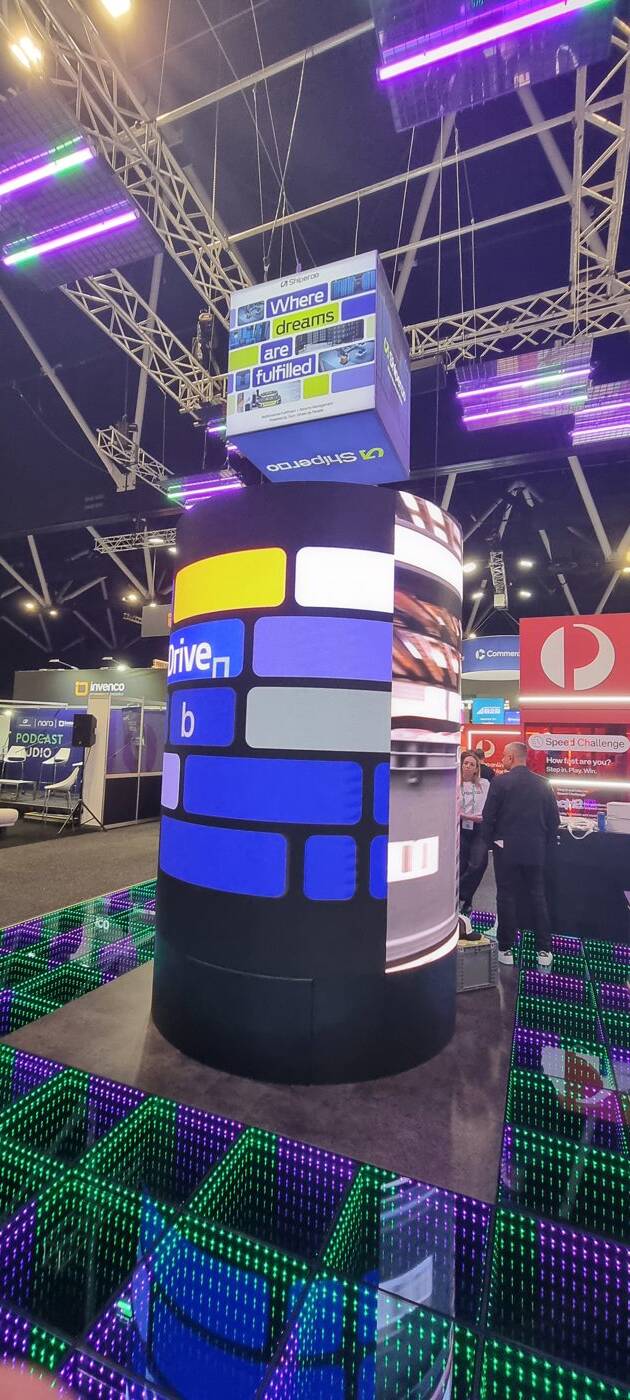
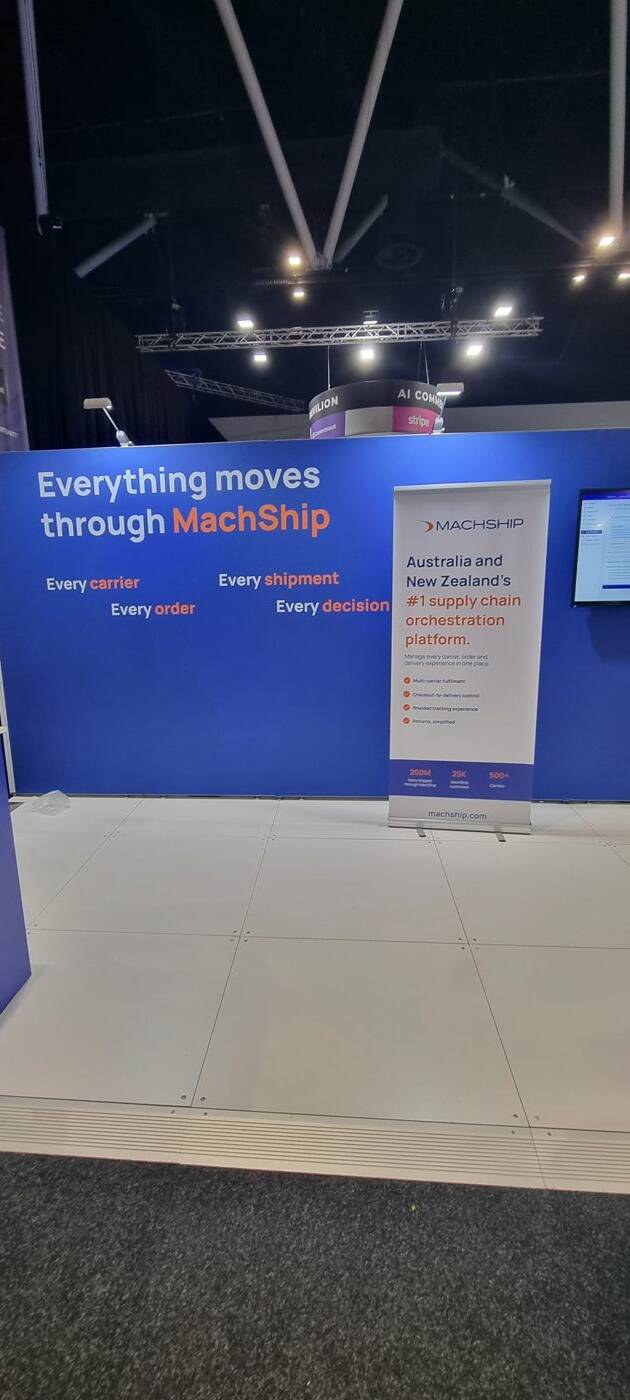
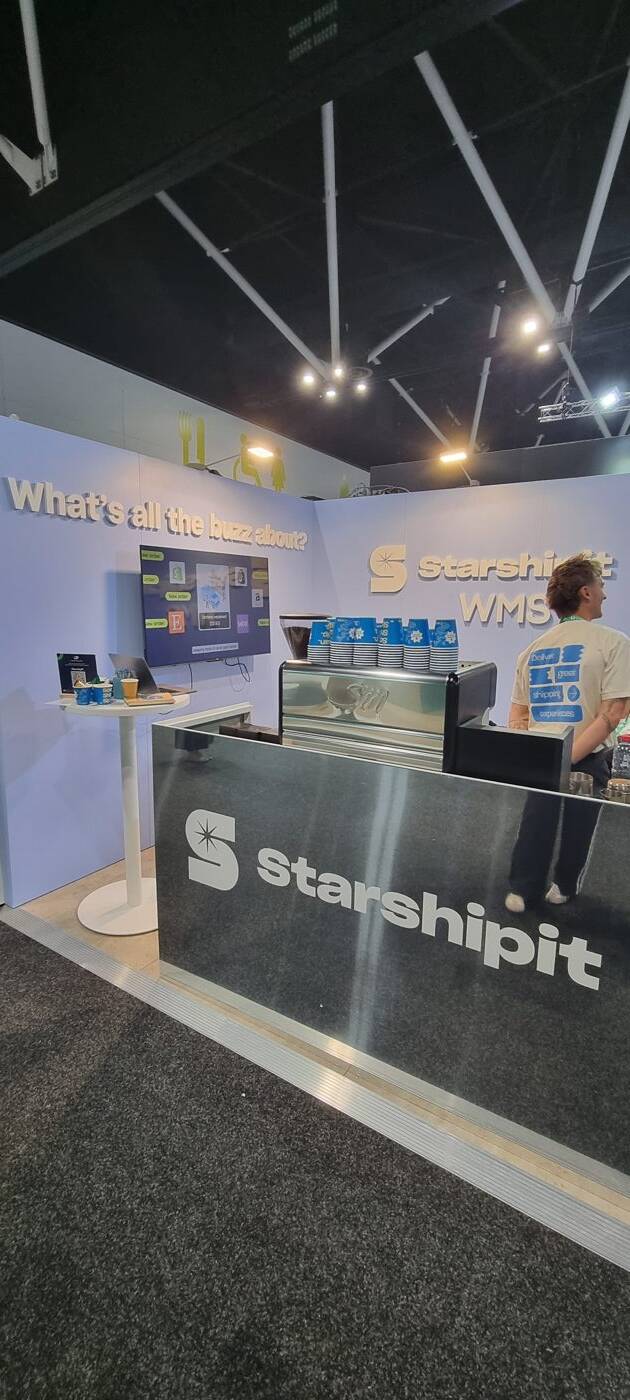
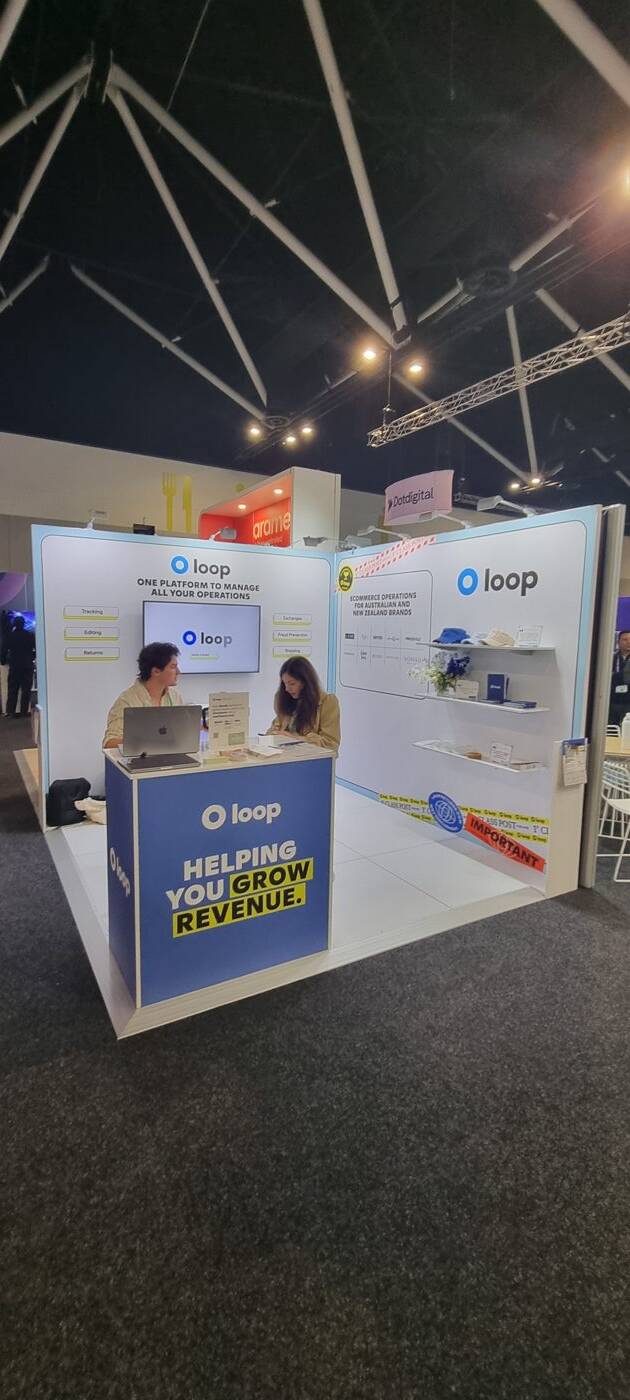

Zonos rounded out the corner with cross-border duty and tax tech for brands selling into the United States, where changes to low-value import thresholds have made landed cost part of the pricing conversation for exporters.
Channels keep multiplying, and so do the message formats
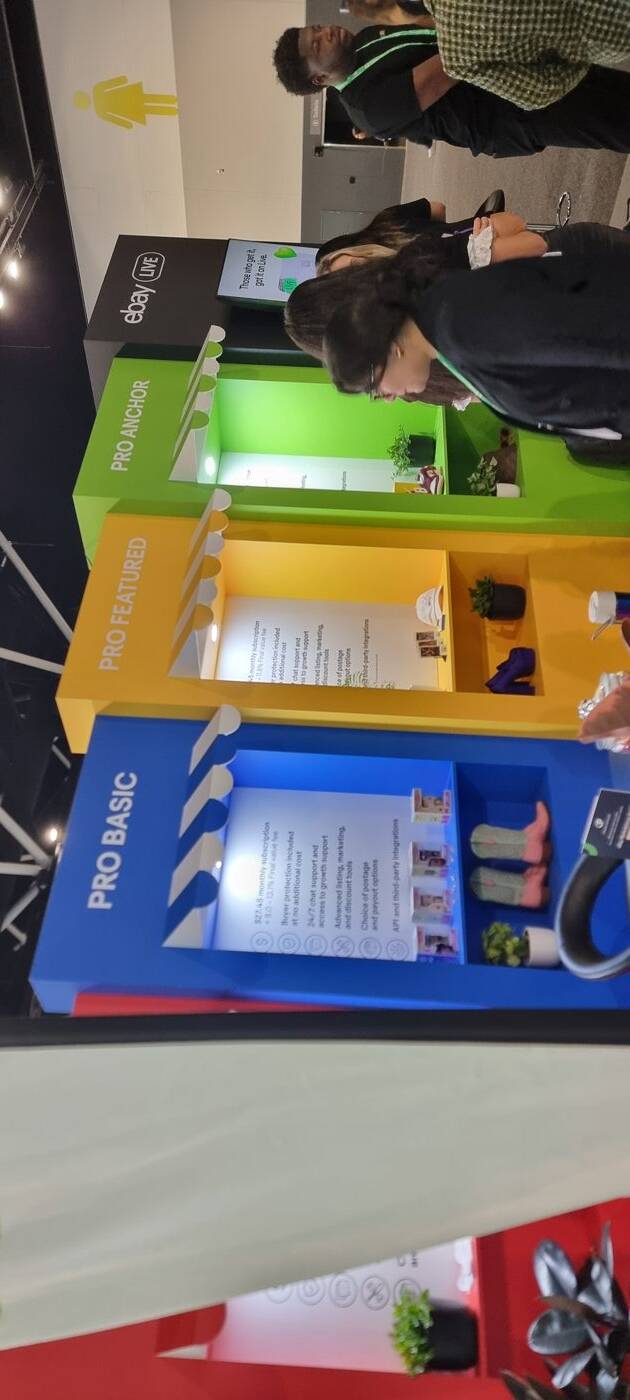
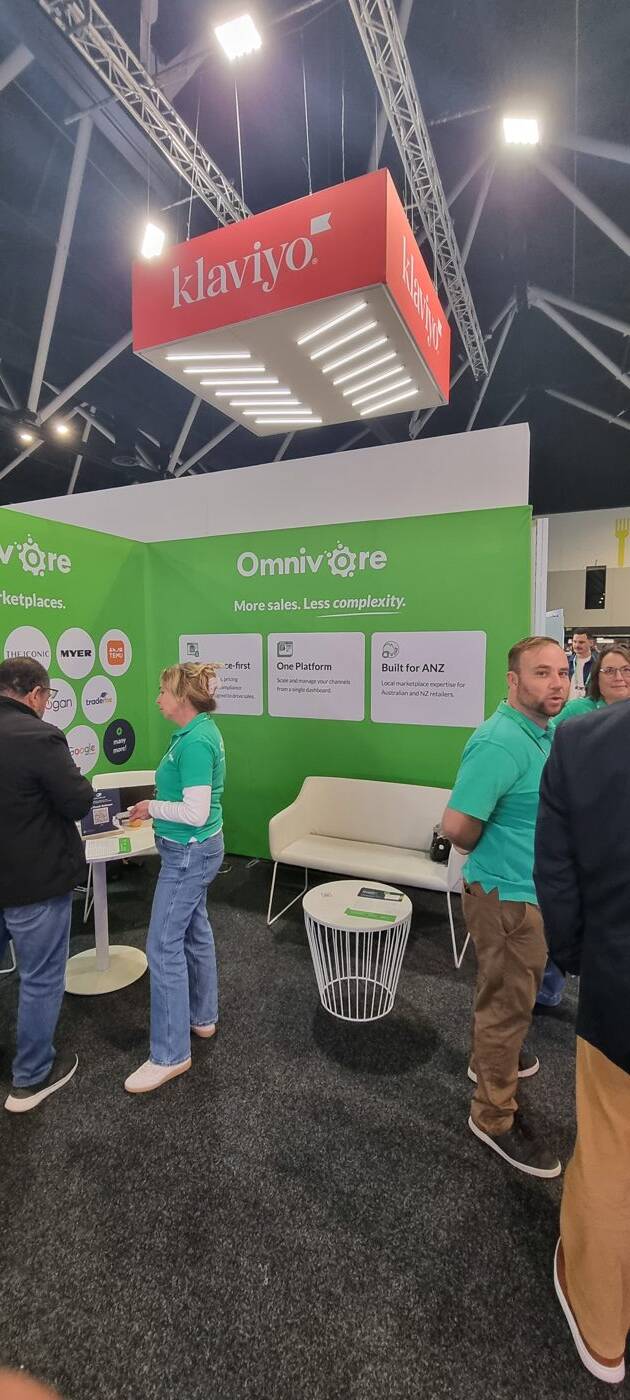
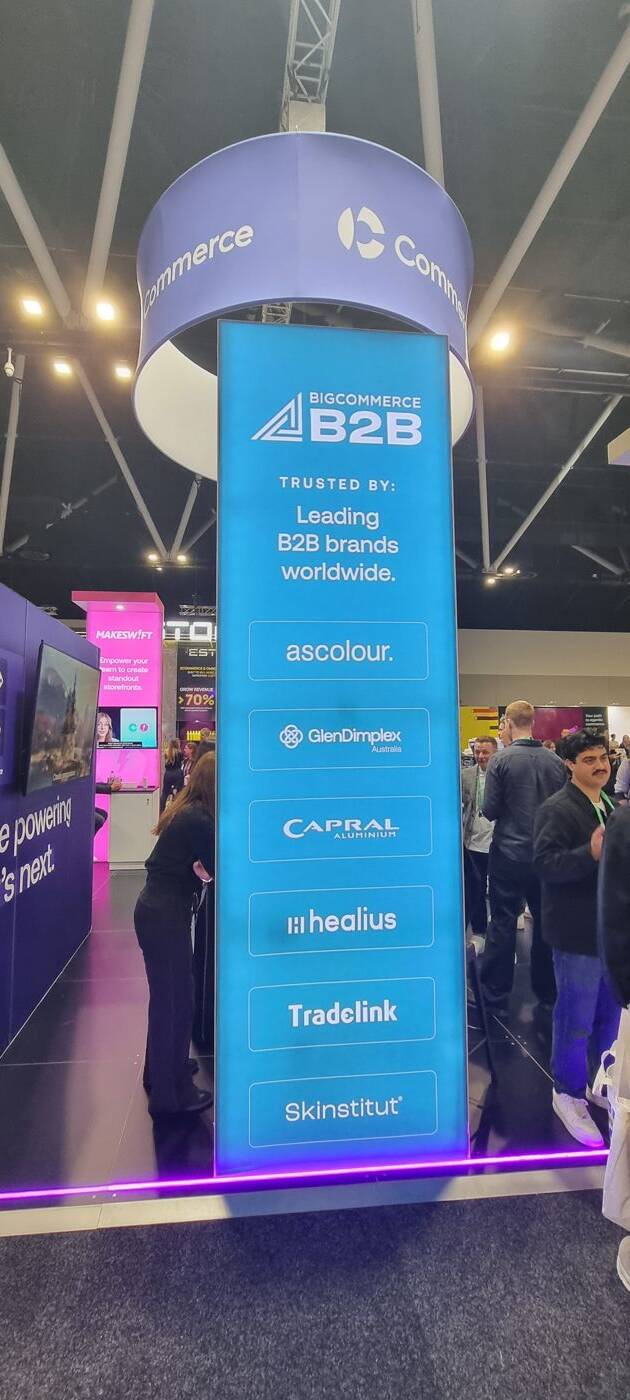
eBay built four physical shopfronts to sell its tiered store subscriptions and promote eBay Live, its live shopping format. At the time of writing, eBay’s Pro Basic store tier is $27.45 per month plus a final value fee of 8.0 to 13.1 per cent. Omnivore pitched one dashboard to manage The Iconic, Myer, Temu, Kogan, Trade Me and Google. Kalodata, a TikTok Shop analytics tool, sat quietly in the startup aisle, an early signal that TikTok Shop tooling has arrived in Australia. BigCommerce B2B showed how deep wholesale ecommerce now runs, with Capral Aluminium, Tradelink and Healius as reference customers, and a full B2B Ecommerce Unlocked conference stream ran all day.

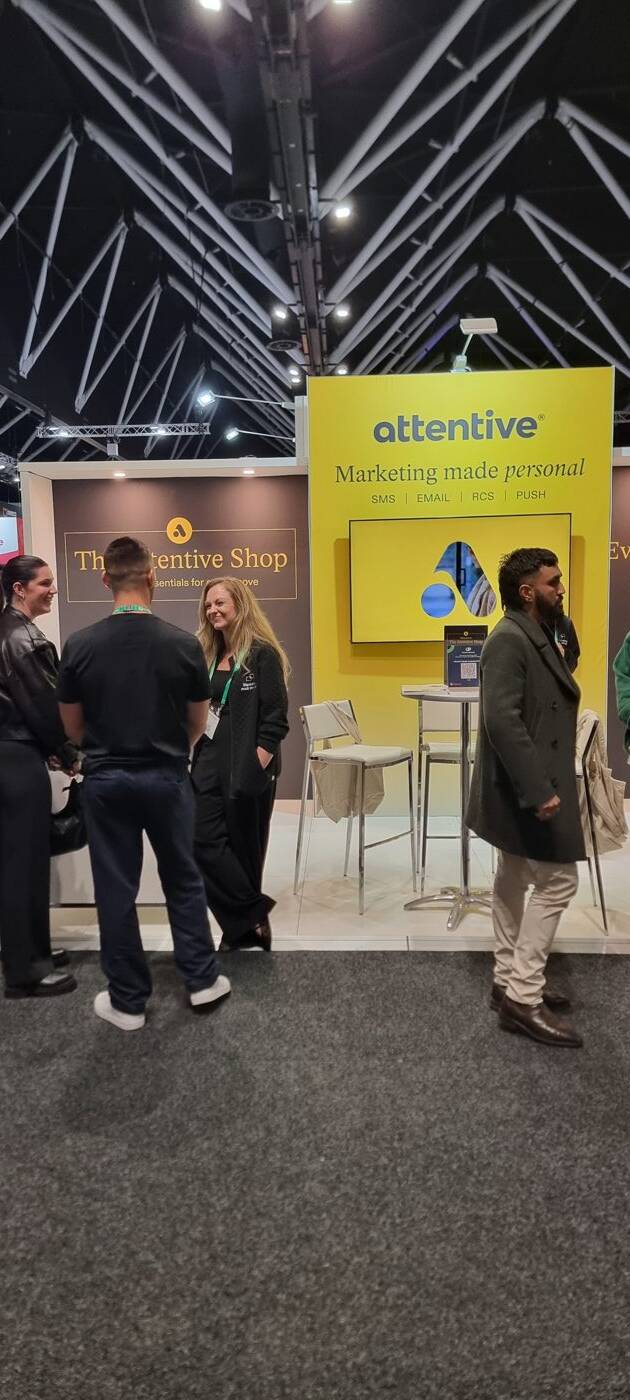
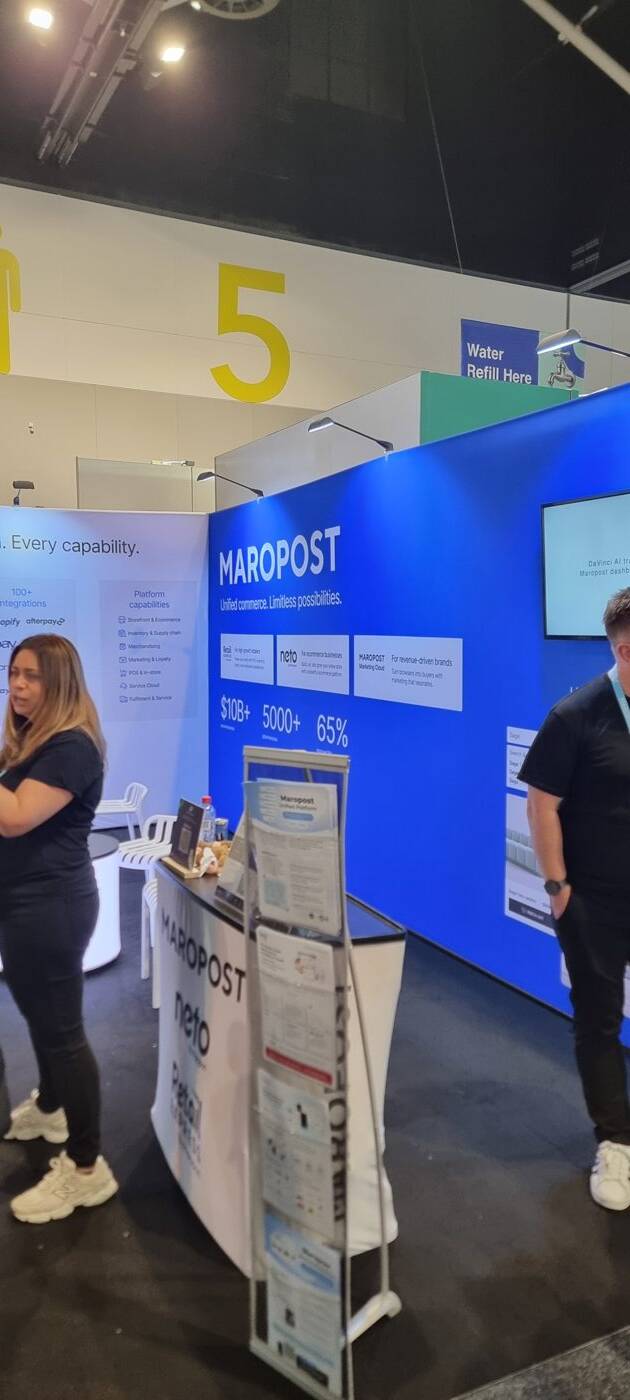
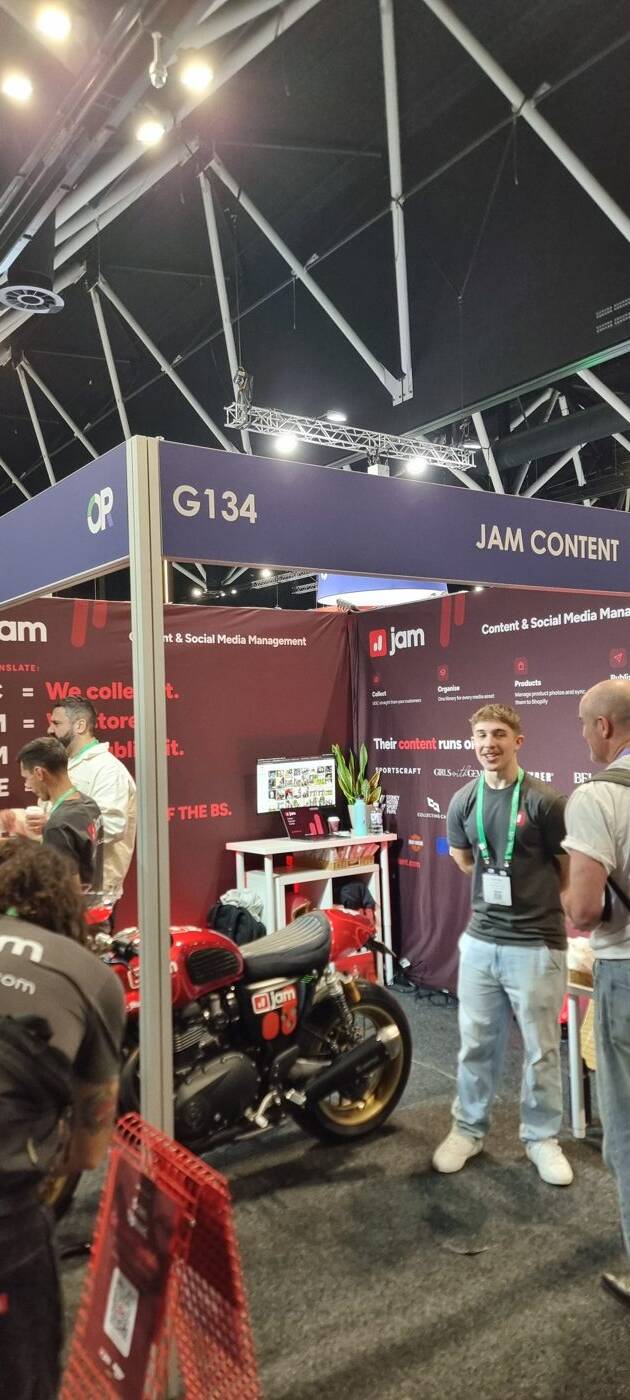
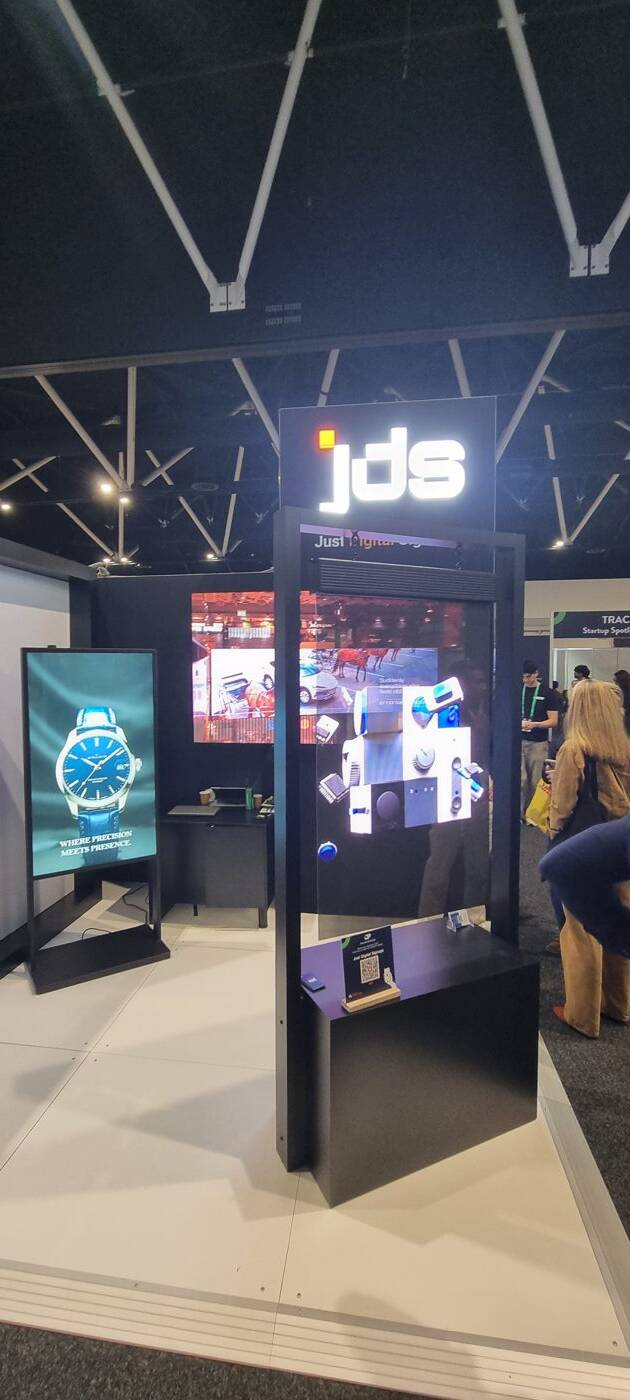
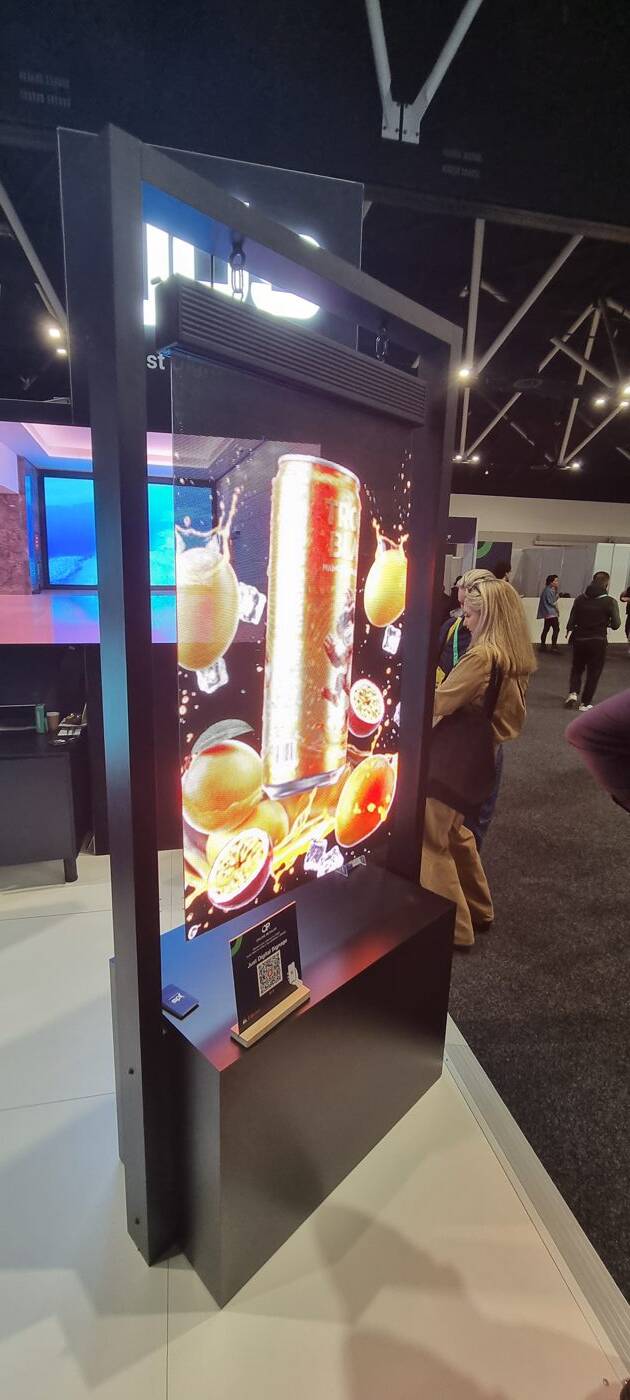
On messaging, the word to learn is RCS. Attentive led with “SMS, Email, RCS, Push” and local player Tall Bob matched it. Rich, branded, interactive messages inside the native messages app are coming for the space plain SMS holds today. Klaviyo, Dotdigital and Maropost rounded out a retention corner that keeps growing while acquisition costs rise. JAM Content, complete with a branded café racer motorbike, sold UGC collection and social management for brands like Sportscraft and Harley-Davidson, and JDS showed transparent LED signage that blurs the line between physical retail and digital media.

What Australian retailers should do with this
Reading a floor is only useful if it changes your plan. Five moves we would make coming out of this show:
- Measure your AI visibility now. Ask ChatGPT, Gemini and Perplexity the questions your customers ask and see whether you appear. If you do not, your reviews, structured data and third-party mentions are the levers.
- Treat reviews and product data as ranking assets, not admin. Every AI visibility tool on that floor feeds on them.
- Pick where AI lives in your business. Standalone tools, API-connected, or embedded in your platform. Deliberately, not by accident.
- Put a number on retention. Acquisition costs keep rising, and the biggest corner of the floor was email, SMS and loyalty for a reason.
- Trial one new channel with real intent. eBay Live, TikTok Shop or a marketplace via an aggregator, measured properly against your existing CPA.
Want the shortcut?
We turn everything above into practical training and hands-on builds for Australian businesses. If you want to explore how AI can accelerate your growth, consider joining a Nimbull AI Training Day or reach out for personalised AI Consulting services.